
The role of dietetics in the multidisciplinary management of obesity
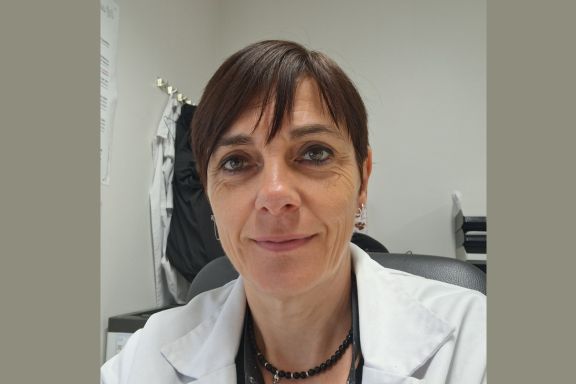
On the occasion of World Obesity Day, Ingrid Hanson, a dietitian accredited by the Federal Public Service for Public Health at the Integrated Obesity Center of H.U.B., explains the delicate issue of nutrition for patients who wish or need to lose weight.
A personalized and Sustainable Care
What is the role of a dietitian in the management of a patient with obesity? How does this differ from that of a nutritionist?
The Integrated Obesity Center supports patients who are overweight or living with obesity in their weight loss journey, whether through lifestyle modifications alone or with the help of medication or surgical techniques.
My role within the team is to support patients in these three approaches throughout the entire proposed program, aiming for comprehensive and sustainable care.
This includes assessing their eating habits, implementing personalized nutritional follow-up adapted to their treatment, providing therapeutic education, and offering motivational support. I work closely with the multidisciplinary team (surgeons, endocrinologists, gastroenterologists, internist, physician nutritionist, and psychologists) to offer a complete and situation-specific approach.
To answer your question regarding the approach of nutritionists, it is important to clarify that the term “nutritionist” is not legally protected in Belgium.
At the CIO, we are 4 dietitians and we also collaborate with a general practitioner who is a nutritionist. This is important to specify because the term “nutritionist” does not carry much meaning, as it is not protected in Belgium, unlike the title “dietitian.” The title of Dietitian is legally protected and defined by the Royal Decree of February 19, 1997. In addition, accreditation granted by the Federal Public Service for Public Health is mandatory to demonstrate that dietitians meet the required standards to practice (education, internships, continuing professional development, compliance with professional regulations) and to guarantee patients a professional, high-quality service.
The physician nutritionist (or holder of the interuniversity certificate in clinical nutrition) has a complementary approach to that of dietitians.
At the Integrated Obesity Center, the physician nutritionist mainly addresses the medical and metabolic aspects: making diagnoses and prescribing tests and medical treatments.
As a dietitian, I specialize in daily nutritional and micronutritional support. The era of rigid meal plans is over! Our support is designed to be practical, personalized, and applicable to everyday life. This is even more relevant with the arrival of new drug treatments, which require regular monitoring of muscle mass, protein intake, and vitamin and mineral intake.
Our goal is to support all patients engaged in weight loss over the long term, help them gradually modify their eating behaviors through concrete and realistic objectives, limit the risk of nutritional deficiencies, overcome barriers, and build a more peaceful relationship with food.
How do you adapt dietary advice to different patient profiles?
Each patient is unique, which is why adaptation is central to our work. Our patients follow different care pathways and may benefit from medication, an intragastric balloon, or surgery to support weight loss. Management is progressively tailored on a case-by-case basis, including possible texture adaptations, adjustments in portion sizes, and advice to relieve treatment side effects.
To personalize care, I consider age, sex, family and social context, eating habits and preferences, level of physical activity, and any associated medical conditions.
For adults followed at the CIO, support focuses on daily organization (meal timing, help with menu planning, portion sizes, incorporating moments of physical activity), managing meals at work, understanding hunger and satiety signals, and ensuring long-term sustainability of changes.
Advice may also vary according to sex, particularly to account for hormonal differences, life stages such as menopause, and specific individual issues.
For patients with comorbidities such as diabetes, hypertension, or metabolic disorders, I work closely with the medical team to provide targeted, safe, and personalized nutritional recommendations.
The objective always remains the same: within the framework of a chronic disease, where the risk of relapse is real regardless of the treatment implemented, to propose adapted, realistic nutrition compatible with daily life in order to promote sustainable changes and improve quality of life.
What are the most common dietary obstacles you observe among your patients and how do you help them overcome them?
Obesity is recognized as a multifactorial disease linked to overall lifestyle. Dietary obstacles are often multiple and intertwined.
On an emotional level, many patients exhibit eating behaviors influenced by stress, fatigue, anxiety, or negative emotions. Collaboration with psychologists is essential here. Our role is to help patients better identify their emotional triggers, for example through a food diary, and to develop alternative strategies.
On a social level, professional constraints, irregular schedules, meals eaten on the go, lack of time to cook, and social pressure play a significant role. I support patients by working with them to find practical, realistic solutions adapted to their lifestyle to facilitate daily meal organization.
Economic factors are also decisive. Some patients have limited food budgets, which may hinder access to food perceived as healthier. I analyze with them the products they commonly purchase and the stores they frequent to identify healthier yet equally affordable alternatives. I also adapt menus and meal preparation techniques accordingly.
Regarding differences between men and women, women seem more often confronted with mental load, emotional management, and guilt related to food, whereas men more frequently face barriers related to large portions, alcohol consumption, or eating out. Due to family organization, many women also appear to have more difficulty establishing regular physical activity.
These are, of course, general trends, and each situation remains unique. In all cases, the support aims to identify and gradually overcome these obstacles through a compassionate approach, building concrete, personalized, and sustainable solutions with each patient.
Why is weight stabilization often more difficult than initial weight loss?
We must never forget that obesity is a chronic disease of adipose tissue. Losing weight is often easier than maintaining it, because the body naturally resists weight loss and seeks to return to its initial balance. This applies to all treatments: lifestyle changes, intragastric balloon placement, medication, and surgery.
Stabilization therefore requires long-term support and continuous adaptation. Above all, what matters is preventing health problems related to excess weight, even if many patients will have to grieve the idea of their ideal weight.
What misconceptions about nutrition and obesity would you like to dispel among the general public?
One only has to read the many malicious comments on social media: obesity is still perceived as a weakness, a lack of willpower. With the arrival of new drug treatments for obesity, I have the impression that this hostility is increasing: people are made to feel guilty, led to believe they are “stealing” medication from diabetics, or that they are seeking an easy solution.
In reality, obesity is a chronic, complex, and multifactorial disease influenced by genetic, hormonal, psychological, social, and environmental factors. Reducing it to a statement such as “you just need to move more and eat less” is not only degrading but also medically incorrect.
Another misconception is that following a strict diet, receiving injectable treatments, or undergoing surgery would be enough to solve the problem permanently. Since it is a chronic disease, one never truly recovers from it, and any weight loss induced by restrictive techniques will lead to yo-yo effects, frustration, guilt, and, in the long term, weight regain.
For this reason, we always prioritize establishing the most balanced and sustainable daily eating habits possible, even if the theoretical ideal weight is not reached. The primary goal is to achieve an overall improvement in health, well-being, and quality of life.
Also read: Treating Obesity in 2026
Professor Jean-Charles Preiser, from the Department of Internal Medicine and expert within the team of the Integrated Obesity Centre at H.U.B, explains the new approaches to managing this chronic disease. Read more