
Treating Obesity in 2026
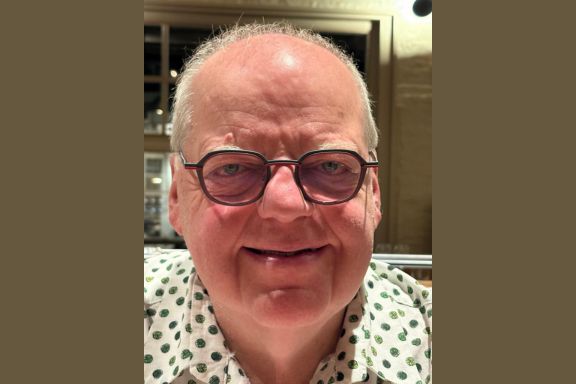
On this World Obesity Day, Professor Jean-Charles Preiser, from the Department of Internal Medicine and expert within the team of the Integrated Obesity Centre at H.U.B, explains the new approaches to managing this chronic disease.
Prevention, Comprehensive Assessment and a Tailored Approach
At the Integrated Obesity Centre of H.U.B, Professor Jean-Charles Preiser from the Department of Internal Medicine sees patients with very different profiles. Some come because of high blood pressure, others for poorly controlled diabetes, joint pain, or sleep disorders. And then there are those who simply walk in and say, “Doctor, I have a problem with my weight.”
“My role,” he explains, “is first to have a global vision. Obesity does not affect just one organ. It can involve the heart, the liver, the joints, the metabolism, and sleep.”
Behind the word “obesity” there is often a silent accumulation of complications: diabetes, hypertension, sleep apnoea, fatty liver disease, certain cancers. Sometimes already present. Sometimes still invisible.
An assessment to understand, not to judge
The first step is not treatment, but assessment. Blood tests to detect sometimes asymptomatic diabetes. Blood pressure measurement. Sleep evaluation. Screening for liver damage, sometimes completely silent.
“We systematically investigate potential complications. Not to make the file heavier, but to guide treatment,” emphasises Professor Preiser.
Today, management has evolved. The options are numerous: structured dietary support; psychological support (particularly in cases of eating disorders); drug treatments; and even bariatric surgery for the most severe cases.
“A few years ago, surgery represented a significant share of referrals. Today, drug treatments occupy an increasing place. About one patient out of two benefits from them. Surgery concerns a minority of cases, around 20%,” says Professor Preiser.
New generations of medications, notably incretin analogues (GLP-1, GIP), have changed the therapeutic landscape. They are part of the current arsenal, with significant results in many patients. But they are neither automatic nor universal. Their cost remains high and reimbursement is limited to certain situations, particularly in cases of poorly controlled diabetes.
“There is no single treatment. There is a strategy tailored to each patient,” he insists.
“It’s all because of your weight”: moving beyond shortcuts
Many patients arrive with a sense of exhaustion: after hearing consultation after consultation that all their symptoms are related to their weight.
Dr Preiser nuances this: “Yes, obesity increases the risk of many complications. But the probability of developing a disease is not strictly proportional to the degree of obesity.”
Some people living with severe obesity for years present few complications. Others, with more moderate obesity, develop early metabolic or cardiovascular problems.
Why? Genetic background plays a major role. Family history — heart attack, stroke, liver disease, diabetes — guides the level of risk. The association with other factors, such as alcohol consumption or smoking, also changes the picture.
The message is clear: obesity is an important risk factor, but it does not explain everything. Each situation deserves individual analysis.
A new definition: looking at fat mass, not only weight
Since 2025, the definition of obesity has evolved: it is no longer only total body weight that matters, but the proportion of fat mass.
“The objective is not to make patients lose muscle or water. What we aim for is a reduction in fat mass while preserving muscle mass,” Professor Preiser reminds us.
This approach is particularly important in geriatrics, where muscle loss can worsen frailty and increase the risk of falls. Hence the importance of sufficient protein intake and adapted physical activity, even during drug treatment.
Men and women: different risks
Complications are not identical depending on sex. In women, obesity can lead to fertility disorders or polycystic ovary syndrome. After menopause, the risk of breast cancer increases in cases of obesity. Knee pain is also more frequent.
In men, there is a greater accumulation of cardiovascular risk factors and a higher frequency of certain digestive cancers and prostate cancer.
In both cases, screening remains essential. Treating obesity after cancer, for example, can help reduce the risk of recurrence.
Increasingly younger patients
The most striking evolution in recent years concerns the age of patients.
“Obesity is increasing among children and adolescents, often against a background of socio-economic and cultural factors. Sedentary lifestyles, accentuated by the COVID period, have played a role. Many obese young people become obese adults,” laments Professor Preiser.
Some consult spontaneously, with a desire to understand and act early.
Other situations are emerging: women undergoing medically assisted reproduction, where obesity management and fertility treatment occur in parallel. After childbirth, priority may shift to the newborn, pushing maternal health into the background. “These are human realities that must be integrated into care,” the geriatrician points out.
The sensitive issue of relapse
Obesity is a chronic disease. Like any chronic disease, it can lead to relapse.
After surgery, very rapid weight loss can lead to deficiencies or malabsorption problems, and weight regain may occur. With dieting alone, the “yo-yo effect” remains the typical failure when recommendations are not adapted to lifestyle or when an eating disorder is not addressed.
Regarding recent medications, long-term data are still limited. Doses are adjusted progressively according to individual response and side effects. Discontinuation must be gradual, accompanied by increased physical activity and sufficient protein intake to preserve muscle mass. Strategies can be combined: drug treatment before or after surgery, reintroduction in case of weight regain.
“The key is continuity of follow-up,” insists Professor Preiser.
Changing the way we look at obesity and its management
Some patients arrive with a clear idea: “I want surgery” or “I want this new medication.” Sometimes they leave with a different proposal after a full assessment.
“Our role is to explain that several options exist and that the choice depends on the overall medical evaluation,” Professor Preiser recalls.
Obesity is not just a number on a scale. Nor is it a personal failure. It is a chronic, multifactorial disease, influenced by genetics, environment, lifestyle, and social context.
Treating it is not only about losing weight. It is about preventing complications, preserving quality of life, rebuilding self-esteem, overcoming emotional wounds and destructive habits and, in the most severe cases, maintaining autonomy.
For those living with obesity — or supporting a loved one affected by obesity — the message may be this: solutions exist. They are multiple, personalised, and evolving. And above all, they are built together with the patient, step by step, throughout their care pathway and life journey.
Multidisciplinary team-based care
At H.U.B, care is multidisciplinary: internists, endocrinologists, dietitians, psychologists, gastroenterologists, hepatologists, cardiologists, and sleep specialists. This network organisation prevents patients from facing a complex disease alone.

Also read: The role of dietetics in the multidisciplinary management of obesity
Ingrid Hanson, a dietitian accredited by the Federal Public Service for Public Health at the Integrated Obesity Center of H.U.B., explains the delicate issue of nutrition for patients who wish or need to lose weight. Discover the interview.