We're hiring ! Join us and make a difference in our hospitals


Gastroscopy
To ensure you are fully informed about the procedure, we invite you to read this information carefully. Your doctor is available to provide any additional details you may wish to know.
What is a gastroscopy?
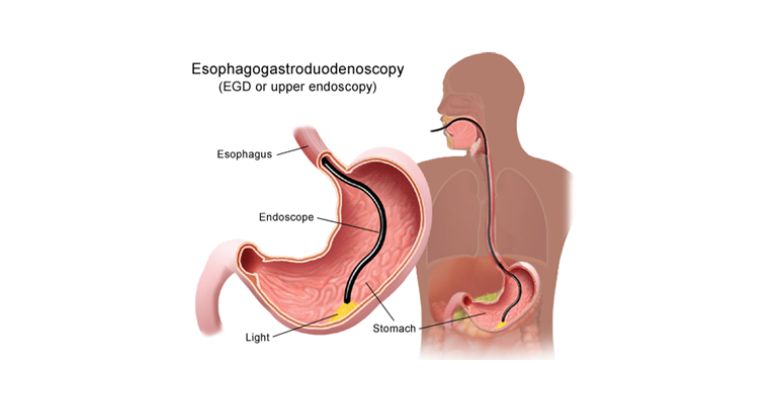
A gastroscopy is a visual examination of the esophagus, stomach, and duodenum. It allows your doctor to detect abnormalities and determine the cause of your symptoms.
Why undergo a gastroscopy?
Your doctor has recommended this procedure because of symptoms suggesting a problem in the upper digestive tract (esophagus, stomach, duodenum). A gastroscopy is performed using an endoscope (a flexible tube with a camera and light at its tip) to detect internal lesions and, if necessary, take tissue samples (biopsies). This examination helps diagnose various problems such as difficulty or pain swallowing, abdominal pain, heartburn, investigation of anemia, diarrhea, weight loss, gastrointestinal bleeding, detection of tumors, etc.
In some cases, dyes may be applied, or image-processing techniques (NBI) or zoom may be used to better detect early tumor lesions.
How to prepare for a gastroscopy?
Before the procedure:
- Inform your doctor about your medical history and the medications you regularly take. Mention any known allergies.
- If you have diabetes, your doctor will advise you not to take rapid-acting insulin and/or oral antidiabetics before the procedure.
For a diagnostic procedure, if you take blood-thinning medications:
- Ticlid® or Plavix®: do not stop
- Low-molecular-weight heparin (Fraxiparine®, Clexane®, Innohep®, Fraxodi®): do not stop
- Sintrom®: check INR a week before; if stable, do not stop
- Eliquis®, Xarelto®, Pradaxa®: do not take the morning dose on the day of the endoscopy
For a therapeutic gastroscopy, discuss with your doctor whether and how to interrupt medication.
You must fast (no food, drink, or smoking) for at least 6 hours before the gastroscopy to avoid impairing visibility or increasing risk during the procedure. Remove dentures and glasses if applicable.
How a gastroscopy is performed?
A local anesthetic spray is applied to the throat. You lie on your left side. A plastic mouthpiece is placed between your teeth. The doctor inserts the endoscope through your mouth into the digestive tract. The procedure is not painful and does not affect breathing, as the endoscope does not enter the lungs. Focus on regular breathing to prevent nausea.
Allow saliva to flow during the procedure and do not try to swallow it. Air is introduced into the stomach, which may cause small burps or a feeling of bloating.
Biopsies may be taken, which may feel like a pinching sensation. The procedure usually takes 5 to 10 minutes.
Sedation or anesthesia can be administered to make the procedure more comfortable. If so, you will be monitored for at least an hour afterward, should not make important decisions, and should not drive for 24 hours. It is recommended to have someone accompany you.
After the procedure, your doctor will advise when you can eat and drink again, explain the results, and may suggest a treatment plan.

Possible complications of gastroscopy
Any medical procedure, even when performed safely and competently, carries a risk of complications.
Complications from gastroscopy are very rare (perforation, bleeding, cardiovascular or respiratory problems, infections). Hospitalization may sometimes be required. Risks may be higher due to your medical history or medications. Complications can occur on the day of the procedure or in the following days.
If you experience abnormal symptoms (abdominal or chest pain, vomiting blood (red or black), cough, fever, chills), contact the treating physician during office hours, Monday to Friday, 8:00–16:30:
- Endoscopy Clinic, Erasme General Hospital: +32 (0)2 555.32.92
- Erasme Day Hospital: +32 (0)2 555.37.77
Email: rendez-vous [dot] Endoscopie [dot] erasme [at] hubruxelles [dot] be (rendez-vous[dot]Endoscopie[dot]erasme[at]hubruxelles[dot]be) - Bordet Institute: +32 (0)2 541.37.20
Email: accueil [dot] endoscopie [at] bordet [dot] be (accueil[dot]endoscopie[at]bordet[dot]be)
If you cannot reach them, contact your primary doctor, an on-call doctor, or the emergency department.
Between each patient, the endoscope is disinfected, and used accessories are sterilized or disposed of (single-use materials).
Therapeutic gastroscopy
Several upper digestive tract conditions can be treated with gastroscopy, usually under sedation or anesthesia. Common procedures include:
- Dilation of esophageal, gastric, or duodenal strictures
- Placement of stents for leaks or narrowing
- Removal of superficial tumors
- Coagulation of vascular lesions
- Stopping bleeding (hemostasis)
- Ligating esophageal varices
- Placement of an intragastric balloon for weight loss
In therapeutic gastroscopy, the risk of complications may be higher depending on the condition being treated and usually requires hospital monitoring.