We're hiring ! Join us and make a difference in our hospitals


Endoscopic Cholangio-Pancreatography (ECP)
To ensure you are fully informed about this procedure, we invite you to read this information carefully. Your doctor is available to provide any additional details you may require.
What is endoscopic cholangio-pancreatography?
Endoscopic cholangio-pancreatography (ECP) is an endoscopic procedure used to treat various problems of the bile ducts or pancreas.
Why undergo endoscopic cholangio-pancreatography?
Your doctor recommended this procedure due to symptoms or findings that require treatment via ECP. This procedure allows for confirming a diagnosis, taking samples (biopsies for microscopic examination), removing stones, draining the bile ducts or pancreatic duct, and placing stents in these organs.
How to prepare for endoscopic cholangio-pancreatography?
Inform your doctor about your medical history and all medications you regularly take (especially those affecting blood clotting: aspirin, Plavix, Sintrom, Xarelto, Eliquis, Pradaxa, etc.).
If you have known allergies, provide details to your doctor. Women must inform their doctor if they are pregnant.
You must fast (no food, drink, or smoking) for 6 hours prior to the procedure. Remove any dentures or glasses.
How is endoscopic cholangio-pancreatography performed?
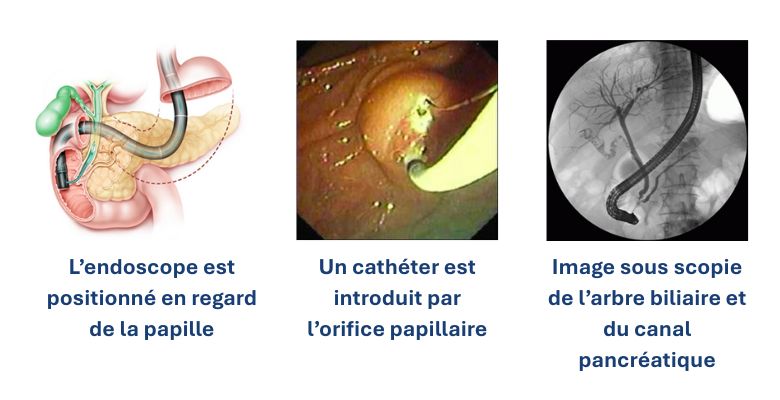
A duodenoscope (flexible instrument) is inserted through the mouth to examine the upper digestive tract up to the duodenum. Air is insufflated to smooth the walls of the digestive tract. The opening where the bile and pancreatic ducts drain is called the “papilla.” It is intubated using a catheter (small plastic tube through the endoscope) and under X-ray guidance, the required treatment is performed (cutting the sphincter of the bile or pancreatic duct, “sphincterotomy,” stone extraction, stent placement for drainage, etc.). Sedation or general anesthesia is provided for your comfort.
Upon waking, you may experience a sore throat, bloating, and gas, which usually subside within 12 hours. A nasal drain may sometimes be necessary for one or two days.
The duration of the procedure varies depending on technical difficulty (20 minutes to 2 hours). Post-anesthesia, hospital monitoring is required.
Between patients, the endoscope is disinfected and accessories are sterilized or disposed of (single-use materials) according to regulations.

Possible complications of endoscopic cholangio-pancreatography
All medical procedures, even when performed under expert and safe conditions, carry a risk of complications.
Complications of therapeutic ECP are rare (around 1%) (digestive wall perforation, bile duct or gallbladder infection, cardiovascular problems, acute pancreatitis, bleeding). They may require prolonged hospitalization, extended fasting, transfusion, or even surgical intervention. Your medical history or certain medications may increase these risks. Complications may occur on the day of the procedure or in the following days.
If you experience abnormal symptoms (abdominal or chest pain, bleeding, chills, fever, jaundice…), contact the treating physician during office hours, Monday to Friday, 8:00 AM to 4:30 PM, at the Endoscopy Clinic, +32 (0)2 555.32.92.
You can also:
- Call the physician in case of an emergency: +32 (0)2 555.58.39
- Contact the secretariat to schedule an appointment by phone at +32 (0)2 555.32.92 or by email at Cons [dot] Gastromed [dot] Erasme [at] hubruxelles [dot] be
If you cannot reach the doctor, promptly contact your general practitioner, on-call physician, or the emergency department.