We're hiring ! Join us and make a difference in our hospitals


Colonoscopy
To ensure that you are fully informed about this procedure, we invite you to read this information carefully. Your doctor is available to provide any additional details you may require.
What is a colonoscopy?
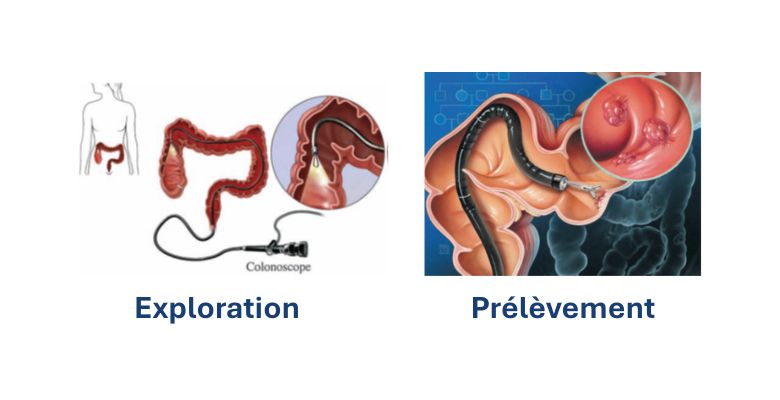
A colonoscopy is a visual examination of the colon that allows detection of diseases of this organ, helping your doctor determine the cause of your symptoms. Additionally, this procedure can detect early colorectal lesions (polyps) and, if necessary, take tissue samples (biopsies) for microscopic analysis or remove them directly (polypectomy).
Why have a colonoscopy?
Your doctor has recommended this procedure due to symptoms suggesting a lower digestive tract (colon) problem or for polyp screening. The colonoscopy is performed using an endoscope (a flexible tube with a camera and light at the tip) to detect internal lesions and allow biopsies or removal if needed. This exam helps diagnose conditions such as diarrhea, abdominal pain, bowel disorders, bleeding, anemia, weight loss, or tumor detection. It also allows for polyp removal or coagulation of bleeding lesions.
How to prepare for a colonoscopy?
Before the procedure:
- Inform your doctor about your medical history and the medications you normally take.
Medications – conditions:
- If you had a barium enema or barium transit study in the week before the colonoscopy, postpone the procedure and take paraffin oil;
- If you take iron supplements, stop 10 days before the colonoscopy;
- If you take Ticlid® or Plavix®, stop 5 days before the colonoscopy on your cardiologist’s advice;
- If you take blood thinners:
- Low molecular weight heparin (Fraxiparine®, Clexane®, Innohep®, Fraxodi®): stop 24 hours before the colonoscopy;
- Sintrom®: stop 5 days before the colonoscopy and switch to heparin as advised by your doctor;
- Eliquis®, Xarelto®, Pradaxa®: stop 2–3 days before the colonoscopy without replacement, as per your doctor’s instructions.
- If you have glaucoma, diabetes, prostate problems, or a medication allergy, inform your doctor.
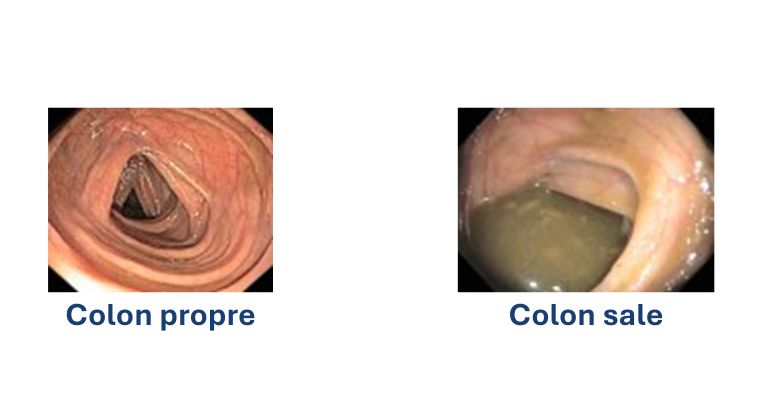
The colon must be completely clean for accurate examination and therapeutic procedures. An unclean colon significantly reduces the quality and diagnostic value of the exam. Follow the preparation instructions carefully (low-residue diet prior to the exam and bowel-cleansing drink the day before). Your doctor may adjust the preparation based on your medical record. Please consult the information regarding colonoscopy preparation.
You must fast (no food, drink, or smoking) for 6 hours before the procedure. Remove dentures and glasses. A protective cream can be applied to the anal area during preparation to prevent irritation caused by diarrhea.

How is a colonoscopy performed?
A flexible endoscope is inserted through the anus and can reach the start of the small intestine (“ileoscopy”). CO2 is insufflated to unfold the intestinal walls. You may feel bloated or need to pass gas during and after the exam.
Various biopsies may be taken if deemed necessary. If polyps are found, they are removed using forceps or an electric knife (polypectomy).
For comfort, sedation or general anesthesia is often offered. The procedure lasts about 30 minutes, but preparation and recovery can take several hours, so plan for a full day. After general anesthesia, 2 hours of monitoring are required. Typically, patients can go home the same day with a companion; driving is prohibited after sedation or anesthesia. For difficult procedures or removal of large polyps, overnight hospital observation may be necessary.

Possible complications of a colonoscopy
All medical procedures, even when performed safely and professionally, carry a risk of complications.
Colonoscopy complications are rare (about 1%) (bowel perforation, bleeding, infections, cardiovascular issues). They may require hospitalization, transfusion, or surgery. Risks can be increased by your medical history or certain medications. Complications can occur during the procedure or in the following days.
If you experience abnormal symptoms (severe abdominal pain, bloody stool, chills, fever), contact your treating physician during office hours:
- Endoscopy Clinic, Erasme General Hospital: +32 (0)2 555.32.92
- Erasme Day Hospital: +32 (0)2 555.37.77
Email: rendez-vous [dot] Endoscopie [dot] erasme [at] hubruxelles [dot] be (rendez-vous[dot]Endoscopie[dot]erasme[at]hubruxelles[dot]be) - Bordet Institute: +32 (0)2 541.37.20
Email: accueil [dot] endoscopie [at] bordet [dot] be (accueil[dot]endoscopie[at]bordet[dot]be)
If unreachable, contact your general practitioner, on-call doctor, or emergency department promptly.
Between patients, the endoscope is disinfected and accessories are sterilized or discarded (single-use equipment).