We're hiring ! Join us and make a difference in our hospitals


Sickle Cell Disease
Sickle Cell Disease

What is sickle cell disease?
Sickle Cell Disease is a genetic disorder of haemoglobin, the main component of red blood cells, which transports oxygen throughout the body. In sickle cell disease, the haemoglobin is abnormal and is called haemoglobin S (normal haemoglobin is called haemoglobin A). This abnormal haemoglobin causes the red blood cells to become crescent-shaped (known as sickle-shaped red blood cells). This abnormal haemoglobin causes the red blood cells to become crescent-shaped (known as sickle-shaped red blood cells).

These abnormal red blood cells have two main consequences:
- Abnormal rigidity, which causes obstruction of the blood vessels and prevents blood—and therefore oxygen—from reaching the tissues and organs
- Significant fragility, which causes their accelerated destruction and leads to anaemia (red blood cell and haemoglobin levels that are too low)
These mechanisms lead to acute and chronic complications affecting all of the patient’s organs, requiring specialised multidisciplinary follow-up.
Watch our films on Sickle Cell Disease
Causes and risk factors
Causes and risk factors
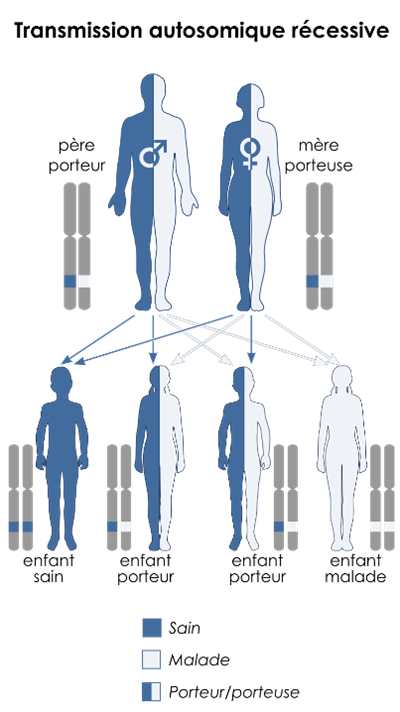
Sickle cell disease is an inherited genetic disorder, meaning that abnormal haemoglobin (haemoglobin S) is transmitted by the parents to their children and is present from birth. We all carry two copies of each gene: one copy is inherited from the mother and one copy is inherited from the father. To have sickle cell disease, a person must have two abnormal genes and therefore have received one copy of an abnormal gene from each parent. People carrying only one abnormal gene are referred to as “healthy carriers” and show no signs of sickle cell disease.

Care: diagnosis and treatment
Diagnosis involves a blood test to detect the presence of abnormal haemoglobin (not to be confused with the A, B and O blood groups, which are unrelated to sickle cell disease). This test is sometimes supplemented by genetic analysis to clarify the diagnosis. Our laboratory is recognised as a Belgian and European reference laboratory for the biological and genetic diagnosis of red blood cell diseases.
The only current curative treatment is a bone marrow transplant (or haematopoietic stem cell transplant), mainly performed in paediatric care. At present, management is based on screening for and treating complications, as well as treatments capable of alleviating red blood cell abnormalities and their consequences (for example, hydroxyurea or Hydrea®). Thanks to our expertise, our centre also has several clinical study protocols enabling patients to benefit from therapeutic innovations in this field. Clinical studies enable patients to participate in research and help advance care for people with sickle cell disease, while offering them the possibility of benefiting from new treatments or approaches for this condition. Red blood cell transfusion also plays an important role in the therapeutic arsenal. Its use in patients with sickle cell disease is complex and requires close collaboration between clinicians, the laboratory and technical platforms (such as dialysis for carrying out exchange transfusions).
Search
In addition to research into new treatments, our team coordinates several studies aimed at improving our understanding of the disease and its clinical consequences, as well as improving patient care (what is known as clinical research).
Furthermore, our team collaborates with various research laboratories in Belgium and abroad to advance our understanding of the mechanisms underlying sickle cell disease and other red blood cell disorders. This research helps link cellular mechanisms to clinical manifestations and paves the way for new treatments (what is known as translational research).
Team and multidisciplinary care
Patient care is provided by a multidisciplinary team comprising physicians specialising in sickle cell disease, as well as coordinating and specialist nurses. When hospitalisation is required, patients are admitted to a dedicated inpatient unit providing care specific to this condition. Follow-up also relies on a network of referring physicians specialising in the various affected organs, with particular expertise in aspects related to sickle cell disease (Neurology, Ophthalmology, ENT, Stomatology, Cardiology, Pneumology, Gastroenterology, Nephrology, Urology, Digestive surgery, Orthopaedic surgery, etc.). The department works closely with the hospital’s Erythrocyte Chemistry, Genetics and Immunohaematology/Transfusion laboratories.
Our physicians are also members of the red blood cell subgroup of the Belgian Society of Haematology and maintain close collaboration with the team of Professor P. Bartolucci at the reference centre for rare red blood cell diseases, CHU Mondor in Créteil, Paris, France.
Our department is recognised as a national and European reference centre for rare red blood cell diseases (ERN) and by the French healthcare network for rare constitutional diseases of red blood cells and erythropoiesis (MCGRE).
Expertise and multidisciplinary discussions
Complex cases are discussed monthly during a multidisciplinary meeting attended by experts in the relevant areas. These meetings are also open to other hospitals within the network, enabling collaboration and the sharing of expertise for the benefit of patients. To register a patient for this multidisciplinary consultation meeting, please complete the information form and send it to secretariat [dot] hematologie [at] hubruxelles [dot] be (secretariat[dot]hematologie[at]hubruxelles[dot]be).
A service recognised as a centre of expertise
Brussels University Hospital – Erasme Hospital is recognised as a European reference centre for the management of red blood cell disorders, including Sickle Cell Disease.
Associated services
Associated services

Our specialist doctors in Sickle Cell Disease
Prof. Martin Colard
Professor of Haematology, H.U.B. – Erasme; national adult sickle cell disease expert, coordinator of the sickle cell disease inpatient unit

Dr Aude Theunissen
Clinical haematologist, Adult Sickle Cell Disease Reference Centre, Red Blood Cell Disorders Unit, Brussels University Hospital – Erasme
Image

Cross-functional collaboration: Queen Fabiola Children’s University Hospital
At H.U.B, care for Sickle Cell Disease is also provided at the Children’s Hospital (HUDERF). For more information, click on the link below.