We're hiring ! Join us and make a difference in our hospitals


Enteroscopy
To ensure that you are clearly informed about this procedure, we invite you to read this information carefully. Your doctor is available to provide any additional explanations you may require.
What is an enteroscopy?
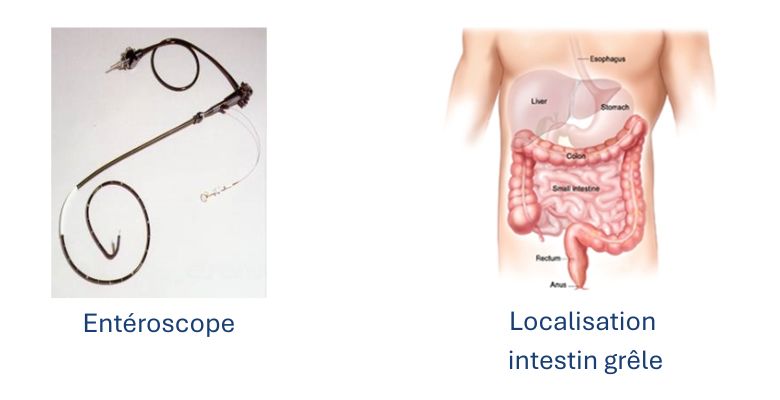
Enteroscopy is a visual examination of the small intestine that can reveal lesions, allowing your doctor to determine the cause of your symptoms or abnormal blood tests (anemia). If necessary, tissue samples (biopsies) can be taken for microscopic analysis or lesions can be treated.
Why have an enteroscopy?
Your doctor recommended this procedure due to symptoms suggesting a problem in the digestive tract (small intestine). Enteroscopy is performed using an endoscope (a flexible tube with a camera and light at the tip) to detect internal lesions and take biopsies if needed. It helps diagnose various conditions (diarrhea, abdominal pain, bowel transit disorders, bleeding, anemia, weight loss, tumor detection, etc.). Polyp removal or coagulation of bleeding lesions is also possible.
How to prepare for an enteroscopy?
Inform your doctor about your medical history and current medications (especially blood-thinning drugs: aspirin, Plavix, Sintrom, Xarelto, Eliquis, Pradaxa…). Also report any known allergies.
- For lower enteroscopy, the intestine must be completely clean to allow accurate examination and therapeutic procedures. Follow the preparation instructions carefully (low-residue diet in the days before the exam and bowel-clearing drink the day before). See the colonoscopy preparation instructions.
- For upper enteroscopy, no preparation the day before is needed.
You must be fasting (no food, drink, or smoking) for at least 6 hours before the procedure. Remove any dental prostheses and glasses.
How is an enteroscopy performed?
A long flexible endoscope is inserted through the mouth (upper enteroscopy) or anus (lower enteroscopy) and advanced into the small intestine. Sometimes, an overtube or balloon system is used to facilitate progression. Air is insufflated to flatten the intestinal walls. You may feel bloated or have gas after the procedure. Various biopsies may be taken if your doctor deems it necessary.
If polyps are found, they are removed with forceps or an electric knife (“polypectomy”). Vascular ectasias (angiomas) may be coagulated.
For your comfort, general anesthesia is often offered. The procedure lasts approximately 45 to 90 minutes, depending on whether both upper and lower routes are used. Hospital observation overnight is required after anesthesia.

Possible complications of enteroscopy
Any medical procedure, even when performed under optimal conditions, carries a risk of complications.
Enteroscopy complications are rare (intestinal perforation, hematomas in the wall or abdomen, bleeding, infections, cardiovascular problems). Hospitalization or surgery may sometimes be required. Risk may be higher with prior medical history or certain medications. Complications can occur on the day of the procedure or in the following days.
In case of abnormal symptoms (severe abdominal pain, blood in stool – red or black, chills, fever), contact the treating doctor during office hours (Monday to Friday, 8:00 – 16:30):
- Endoscopy Clinic, Erasme General Hospital: 02/555.32.92
- Day Hospital: 02/555.37.77
If unreachable, promptly contact your general practitioner, on-call doctor, or emergency department.
Between patients, the endoscope is disinfected, and used accessories are sterilized or disposed of (single-use equipment).